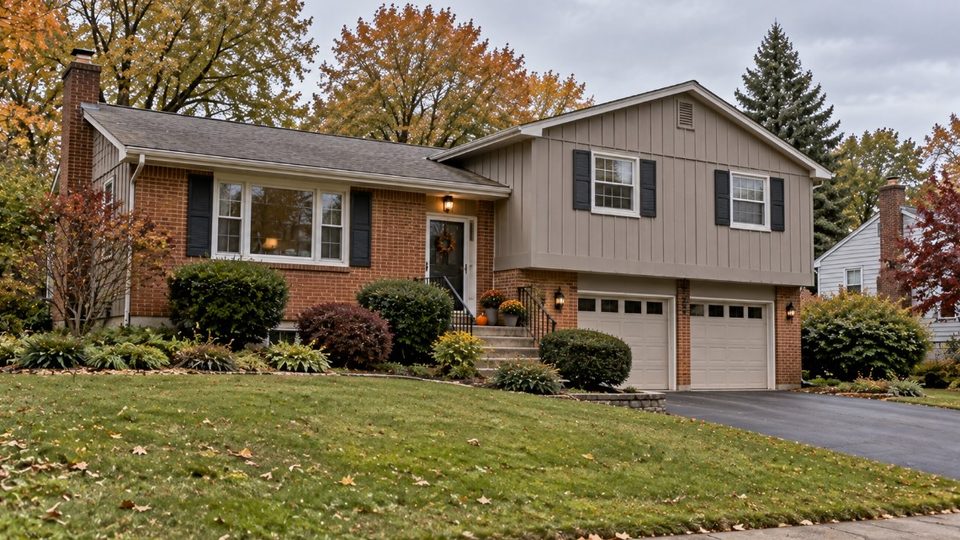
A Long-Settled Township With a Very Mixed Building Stock
Plymouth Meeting sits in Plymouth Township, Montgomery County, in the 19462 ZIP, at the junction of the Blue Route and the Pennsylvania Turnpike. It is an old settlement — the Plymouth Friends Meeting House dates from the early eighteenth century — overlaid with substantial mid-century suburban development, later subdivisions, and a large commercial and retail presence around the Plymouth Meeting Mall and the highway corridors.
For mold work that means three distinct categories: a small number of genuinely old stone buildings, a large volume of postwar and later single-family housing, and a significant commercial and multi-family stock.
The Postwar and Mid-Century Housing — the Bulk of It
Most of the residential work here is in ranches, split-levels, Capes and colonials built from the 1950s through the 1970s, plus 1980s and 1990s subdivisions. The failure pattern is the regional standard and it is highly predictable:
- Summer condensation in the basementA buried foundation wall sits at 52 to 58°F year round. From June to September regional dew points run in the mid-60s to low 70s°F. Air at those dew points condenses on that wall with no leak involved. A basement damp in July and dry in January has this, not a leak.
- The rim joistBare or holding an unsealed fiberglass batt. Coldest wood in the building in winter, prime condensation surface in summer, almost never inspected.
- Kneewall attics in CapesUnconditioned triangular voids behind the upstairs bedroom walls, connected to the heated house by every framing gap. Winter condensation on cold sheathing.
- Bath fans terminating in the atticEndemic in unmodernised housing of this era. Produces a distinct dark cone on the sheathing above the bathroom.
- Below-grade living space in split-levelsLiving-room finishes — carpet, drywall, baseboard — installed directly against a partly buried wall.
- Finished basements from the 1980s and 1990sStud wall against masonry, fiberglass batts, paper-faced drywall. The most reliable concealed mold generator in the county.
- Ice damming at the eavesLow-eave, moderate-pitch roofs plus this region's freeze-thaw cycling. Damage at the top plate and in the wall below, often not visible until the following summer.
The Old Stone Buildings
Where genuinely old stone structures survive, the rules change entirely. Fieldstone and schist in lime mortar on rubble footings, no damp-proof course, permanent capillary contact with the ground. These buildings stay sound by being vapour-open, and they are damaged — reliably — by Portland cement repointing, by interior waterproof coatings, and above all by framing an insulated stud wall against the stone. See the fuller treatment on Gulph Mills, where the same building type is more concentrated.
Commercial, Retail and Multi-Family
Plymouth Meeting has a substantial commercial presence and the commercial pattern applies: the mechanical system is the primary vector, since large air handling plant distributes a localised source building-wide within minutes; flat and low-slope roofs are unforgiving of drainage failure and hide saturated deck insulation long before a ceiling tile stains; and retail and restaurant space carries high moisture loads from dishwashing, ice machines and walk-in refrigeration, with condensation around walk-ins a reliable source.
Multi-family and apartment property brings the landlord-and-tenant dimension. Pennsylvania has no mold statute, but the implied warranty of habitability applies to residential rentals, and unit-by-unit complaints are frequently the first sign of a building-wide envelope or ventilation problem rather than an isolated leak. See commercial mold removal.
Ground Conditions and Radon
Plymouth Township sits on Piedmont geology within the area of elevated radon potential that characterises much of Montgomery County, where roughly 40 percent of Pennsylvania homes tested exceed the EPA action level of 4 pCi/L. Radon and moisture share entry pathways through the slab-to-wall joint, slab cracks, the sump pit and utility penetrations, so sealing work done for one frequently benefits the other. Unlike mold, radon mitigation in Pennsylvania is regulated — the DEP certifies testers and mitigators — so there is a real credential to check. If you are opening up a basement for moisture work, it is the sensible moment to test.
The Cheap Fixes First
A meaningful share of basement moisture complaints in this township are resolved by three things that cost very little: clearing the gutters, extending every downspout to discharge at least six feet from the foundation, and correcting grading that has settled over forty years so that it now falls toward the house. Before anyone quotes you for interior waterproofing or a French drain, do these and watch what happens over a season.
What We Get Called About Most in Plymouth Meeting
Ranked by how often it comes up, and tied to the buildings that are actually here rather than to mold in general.
- Finished basements from the 1980s and 1990sThe county's most reliable concealed mold generator, and the most common residential call here.
- Summer condensation on cold foundation wallsDamp in July, dry in January, no correlation with rain. Frequently misdiagnosed as a leak and answered with waterproofing that addresses nothing.
- Bath fans and kneewall attics in postwar housingThe standard pair in unmodernised 1950s and 1960s stock. Both are cheap to correct once identified.
- Commercial mechanical systemsWith a substantial retail and office presence, large air handling plant that distributes a localised source building-wide, and flat roofs that conceal saturated deck insulation.
- Walk-in refrigeration in restaurantsCondensation around and behind walk-ins is a reliable source, and a health-inspection issue as well as a building one.
Neighborhoods and Sections We Cover in Plymouth Meeting
Mold Services Available in Plymouth Meeting
Mold Inspection
Thermal imaging and moisture metering to locate the source before anything is opened up.
DetailsBasement Mold Removal
The dominant mold problem in Plymouth Meeting — finished walls, stone foundations and sump failures.
DetailsBlack Mold Removal
Full containment for water-damage indicator species, plus finding the sustained water source.
DetailsAttic Mold Removal
Sheathing and rafter growth traced back to ventilation, bath fans or ice damming.
DetailsWater Damage & Flood Mold
Burst pipes, sump failures and flooding — the 24 to 48 hour response window.
DetailsClearance Testing
Independent verification by a hygienist who did not perform the remediation.
DetailsWhat Mold Work Costs in Plymouth Meeting
General market ranges for the Greater Philadelphia area, listed for the situations that actually come up in Plymouth Meeting. These are planning figures rather than quotes — nobody can price a job they have not seen, and what moves a number most is the size of the wet area rather than the stained area. The full cost guide explains what drives each one up or down.
| Work | Typical range | Notes |
|---|---|---|
| Mold inspection with thermal imaging and moisture metering | $300–$700 | Most projects should start here |
| Small contained area — one wall section, a closet, behind a water heater | $600–$1,800 | Under roughly 10–30 sq ft |
| Single room | $1,500–$4,500 | Containment, removal, drying, clearance |
| Finished basement — wall removal, drying, clearance | $5,000–$15,000 | Excluding reconstruction |
| Attic remediation with cleaning, treatment and re-insulation | $3,500–$9,000 | Plus $400–$1,200 to reroute a bath fan properly |
| HVAC coil, drain pan and duct remediation | $1,200–$3,500 | Coil clean and drain service alone, $300–$800 |
| Independent post-remediation clearance testing | $350–$700 | The only stage that produces evidence rather than assurance |
| Reconstruction after remediation | $25–$60 / sq ft | Quote this separately so you can compare bids |
Mold FAQ — Plymouth Meeting, PA
Almost certainly not. That seasonal pattern is the signature of condensation, not water intrusion. Your foundation wall sits at 52 to 58°F year round; summer dew points here run in the mid-60s to low 70s. Humid air reaching that wall is already below its dew point and deposits water on it. Waterproofing addresses water arriving from outside, which is not what is happening. Close the basement to outdoor air through the humid months — keep the windows shut, counter-intuitive as that feels — and run a correctly sized dehumidifier plumbed to a drain at 45 to 50 percent from April through October. Be cautious of any company that arrives with a waterproofing quote before measuring anything.
Probably not. In postwar housing of this type the water usually comes from inside the house. Read the pattern: a distinct dark cone above a bathroom means the exhaust fan is discharging into the attic instead of through the roof, which is very common and cheap to fix; general staining worst near the ridge or on the north plane means air leakage through the ceiling or blocked soffit venting; staining concentrated at the eaves means ice damming. A genuine roof leak produces a localised stain traceable to a specific penetration such as a pipe boot or chimney, and it is the least common of the five causes. Go into the attic and physically follow the bath fan duct first.
General market ranges: a small contained area, roughly $600 to $1,800. A single room, roughly $1,500 to $4,500. A finished basement excluding reconstruction, roughly $4,000 to $12,000. Attic remediation with cleaning, treatment and re-insulation, roughly $3,500 to $9,000. Rerouting a bath fan to a proper exterior termination, roughly $400 to $1,200. Inspection roughly $300 to $700. Commercial and retail space is priced per project. Planning ranges, not quotes — see the cost guide.
Three things that matter far more than anything else you will choose. First, sort the exterior water — gutters, downspout extensions, grading — and run a dehumidifier for a full summer so you know how the wall actually behaves before you cover it. Second, put rigid foam board directly against the masonry with taped seams and frame in front of it, rather than putting a stud wall and fiberglass batts straight against the foundation. Third, use paperless or fibreglass-faced gypsum board and do not lay carpet pad on the slab. That specification costs perhaps fifteen to twenty percent more than the conventional one and it is the entire difference between a basement that lasts and one you tear out in a decade.
Yes. Commercial work follows a different pattern from residential: the mechanical system is usually the primary concern because large air handling plant distributes a localised source building-wide within minutes; flat and low-slope roofs hide saturated deck insulation long before anything stains; and retail and restaurant space has high moisture loads from dishwashing and walk-in refrigeration. Projects are normally phased so the business keeps operating, with hard containment, verified negative pressure and after-hours scheduling. See commercial mold removal, or call and describe the building and its occupancy constraints.