Mold Inspections
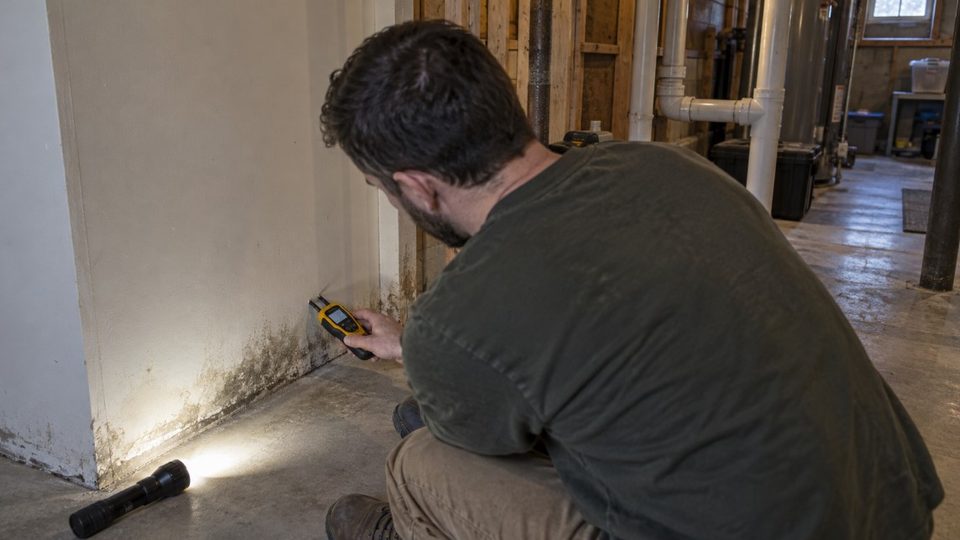
Room-by-room assessment with thermal imaging and pin and pinless moisture metering — including the basement rim joist, kneewall cavities and crawl space most inspections skip.
Southeastern Pennsylvania is full-basement country. Stone foundations in Gulph Mills and Wayne, 1950s Capes across Upper Merion, finished basements in Chesterbrook and Blue Bell, and river-level homes in Bridgeport and Norristown each fail in a different, predictable way. Call and tell us what you are seeing — a mold specialist will work out which of those you are probably looking at, before anyone visits and before you spend anything.
Describe what you are seeing, smelling, or where the water came from. A mold specialist will tell you plainly what it is likely to be, whether it is urgent, and what a proper scope of work would involve.
Most national mold advice is written for hot, humid, slab-on-grade climates. It does not describe what happens in a King of Prussia house. This region sits in ASHRAE Climate Zone 4A — mixed-humid, which means the building envelope is attacked from opposite directions twice a year, and the two attacks produce mold in completely different places.
From June to September, outdoor dew points in the Philadelphia region regularly sit in the mid-60s to low 70s°F. A buried foundation wall holds deep-earth temperature, roughly 52–58°F. Humid outdoor air reaching that wall is already below its dew point and gives up liquid water onto the masonry, onto cold copper supply lines, and onto the underside of the first floor. Simultaneously, moisture wicks upward through the footing and through the slab by capillary action. Nothing leaks. The basement simply sweats, and anything organic in contact with those surfaces — cardboard boxes, carpet pad, the paper facing on drywall, the kraft facing on fiberglass batts — begins to support growth.
In January the direction reverses. Warm, humid indoor air pushes outward through the wall and ceiling assemblies. When it reaches a surface below its dew point — the back of exterior sheathing, the underside of cold roof decking, the unheated cavity behind a Cape Cod kneewall — it condenses inside the assembly where no one can see it. Add the freeze-thaw cycle unique to this climate and you get ice damming: meltwater running down a roof refreezes at the cold eave, backs up under the shingles, and soaks the top plate, the wall cavity and the ceiling below. Ice dam damage is one of the most under-diagnosed mold sources in older Montgomery County housing, because the staining often does not appear until the following summer.
Opening basement windows on a humid July day to “air it out” introduces 70°F dew-point air to 55°F masonry and deposits more water than it removes. So does running a dehumidifier with the windows open. In this climate, a basement is dried by sealing it from outdoor air and running a properly sized dehumidifier to a fixed drain — targeting 45–50% relative humidity, measured, not guessed.
In every one of these cases the mold is a symptom. Killing the growth without correcting the moisture source guarantees it returns, usually within one seasonal cycle. That is why a legitimate scope of work always begins with moisture source identification.
Every project follows the same order: find the water, contain the area, remove what cannot be saved, dry the structure to a documented target, and verify the result independently.
Room-by-room assessment with thermal imaging and pin and pinless moisture metering — including the basement rim joist, kneewall cavities and crawl space most inspections skip.
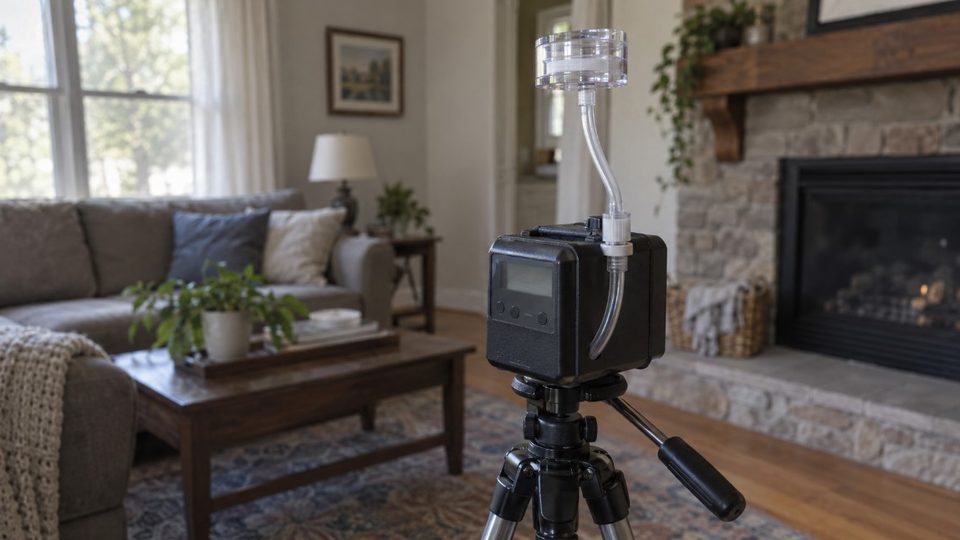
Air and surface sampling analysed by an accredited laboratory, always with an outdoor control sample. Interpretation you can actually act on, not just a spore count.
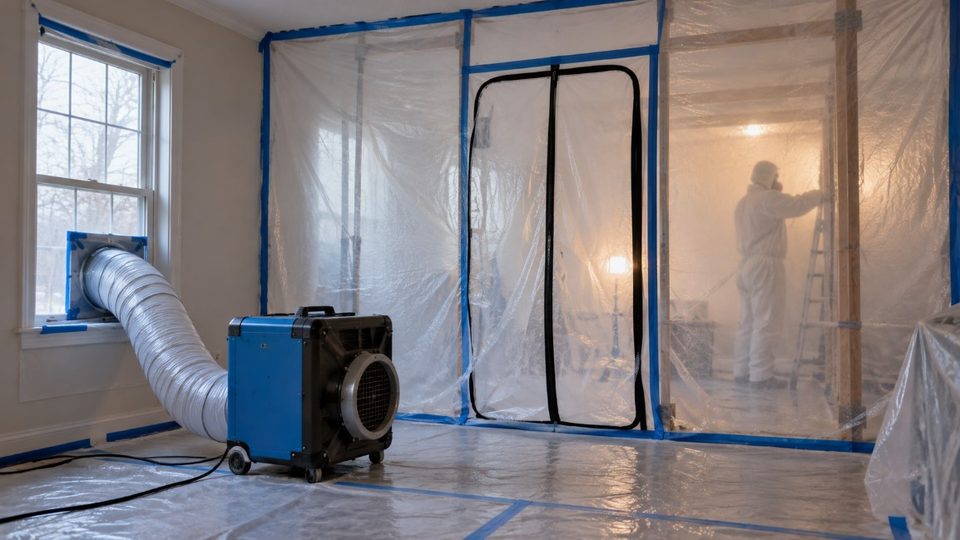
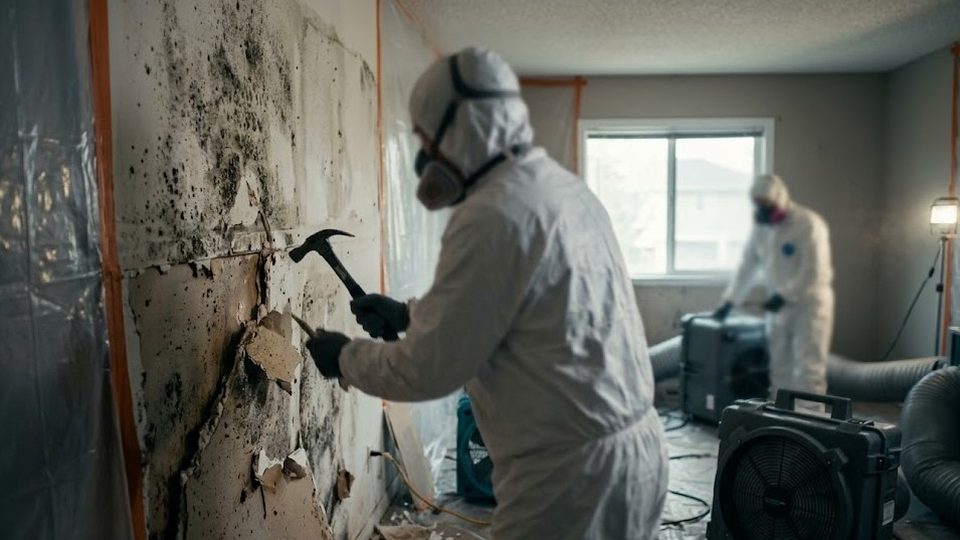
Containment, negative air with HEPA filtration, controlled removal of non-salvageable materials, HEPA vacuuming and antimicrobial treatment to IICRC S520.
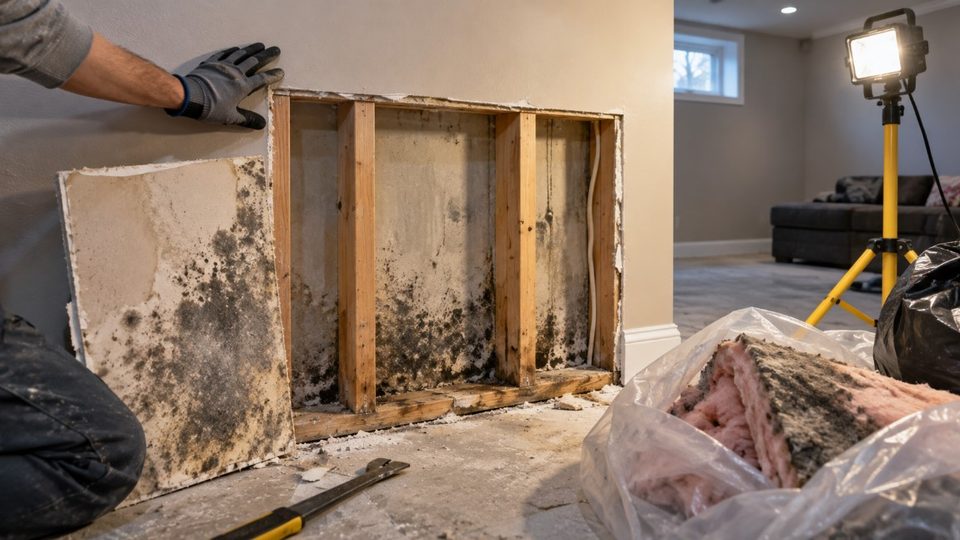
The defining mold problem of this region. Finished-basement assemblies, stone foundations, sump failures, and the dehumidification strategy that keeps it from returning.
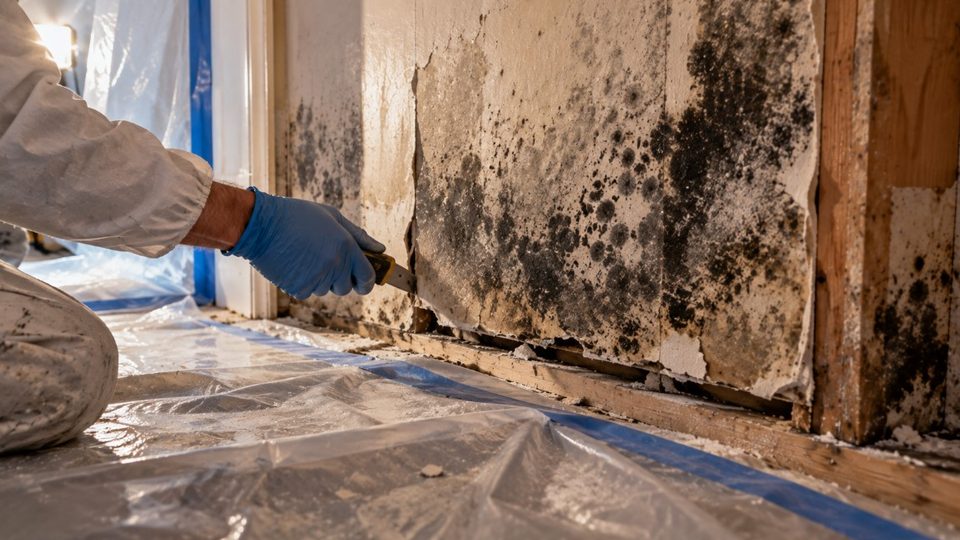
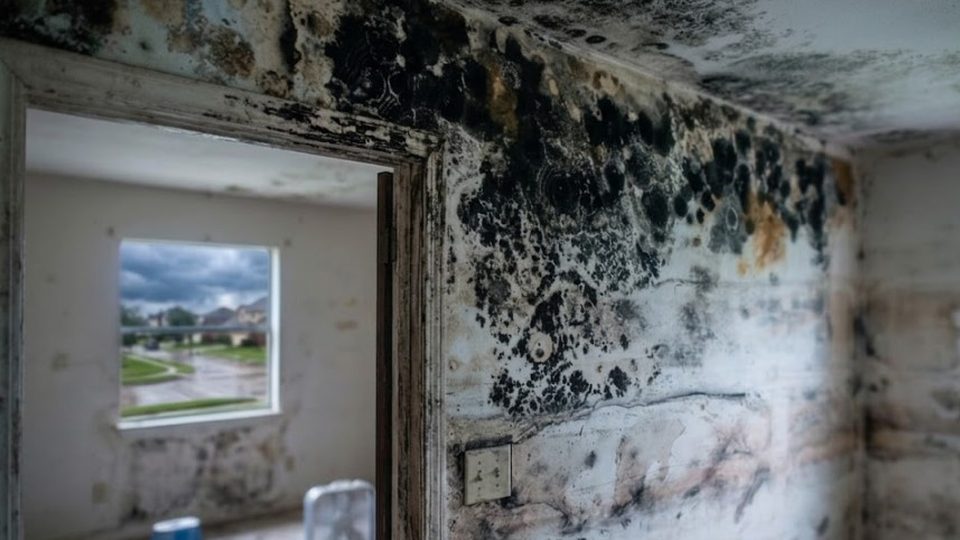
Full containment for Stachybotrys and other water-damage indicator species — including finding the sustained water source that allowed it to establish.
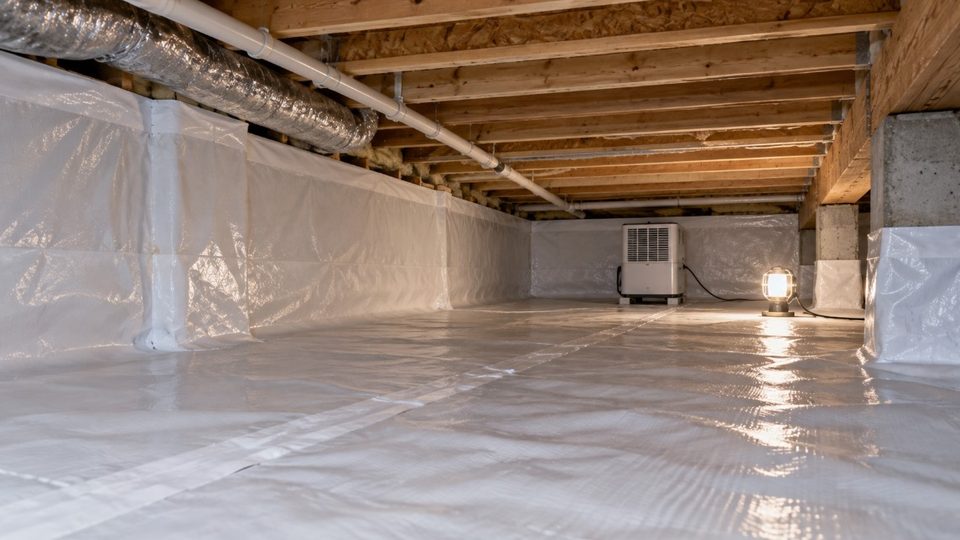
Remediation plus the correction that matters: closing the vents, sealing a vapor barrier, insulating the perimeter wall, and conditioning the space.
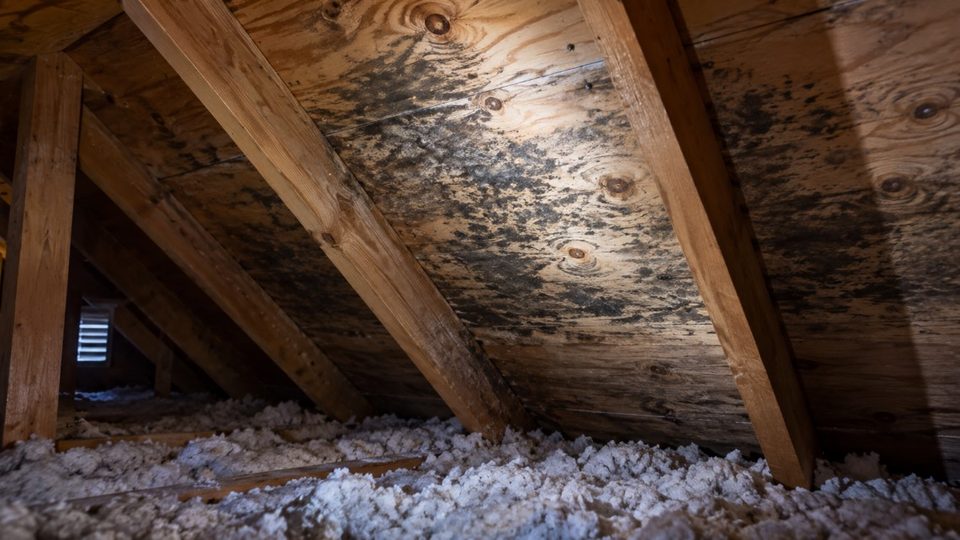
Sheathing and rafter mold traced back to its real cause — bath fans venting into the attic, blocked soffits, ice damming, or an air-sealing failure at the ceiling plane.
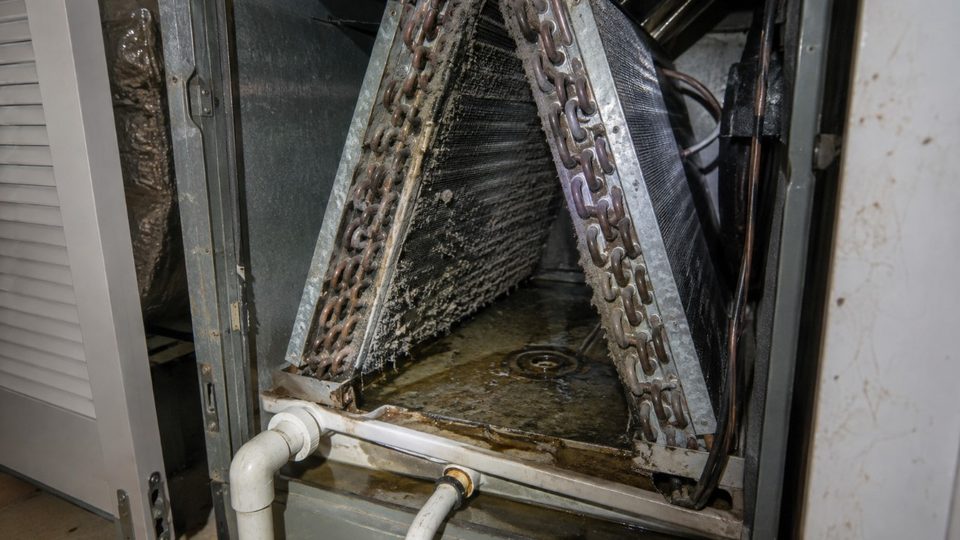
Evaporator coil, drain pan, plenum and duct interior. Your air handler is the one machine capable of distributing a localised problem through the entire house.
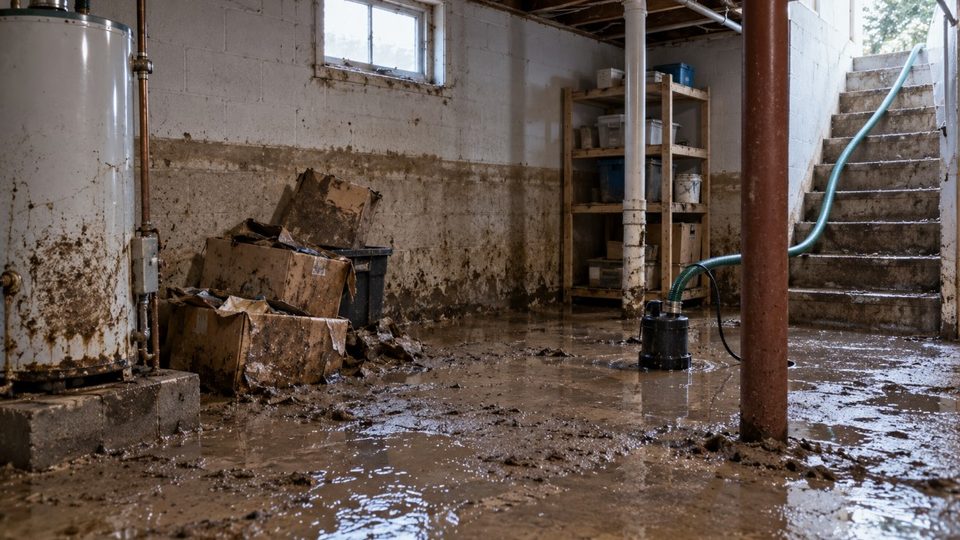
Sump pump failure, burst supply lines, and Schuylkill and Perkiomen flooding. The 24–48 hour window that decides whether this becomes a mold job at all.
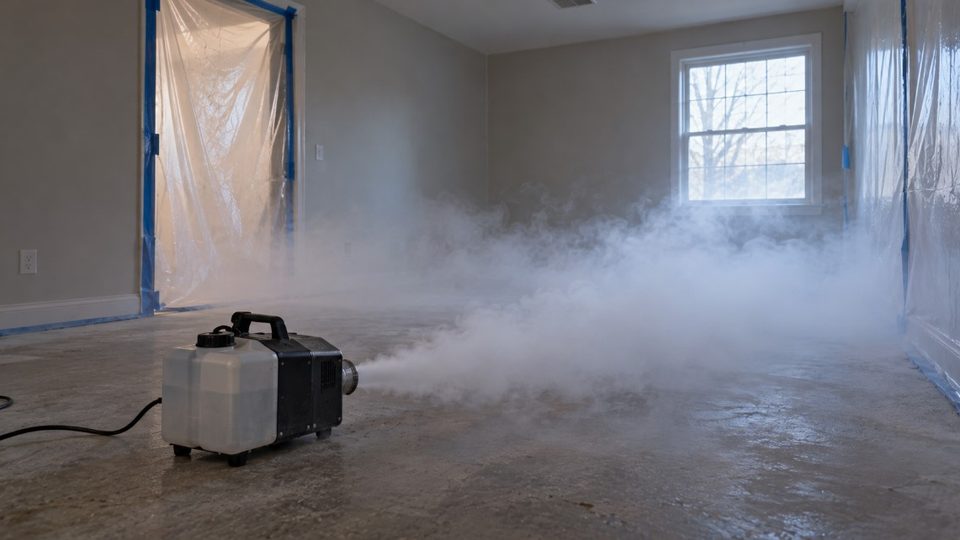
Where a fogging treatment is genuinely appropriate, where it is not, and why it is never a substitute for removing water-damaged porous material.
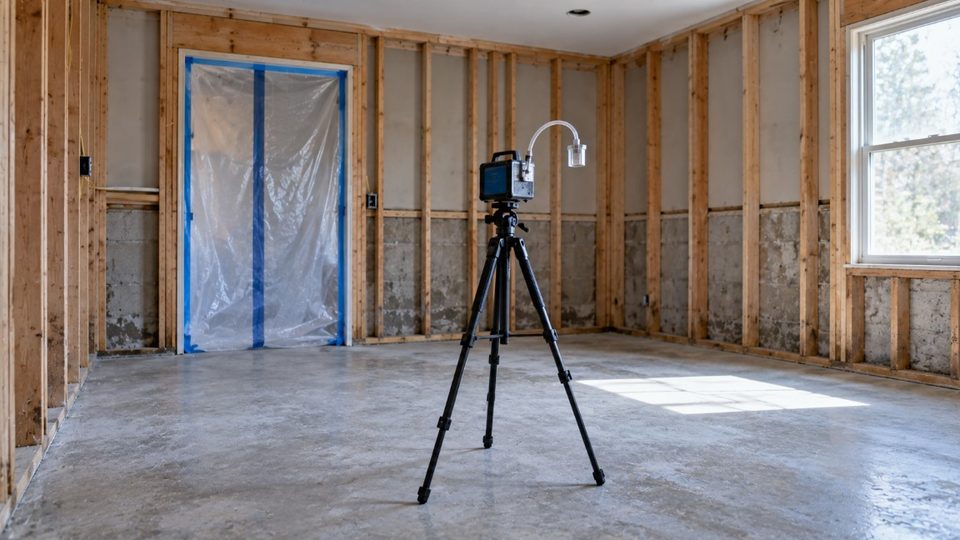
Independent clearance testing by a hygienist who did not perform the remediation. The only document that proves the job actually worked.
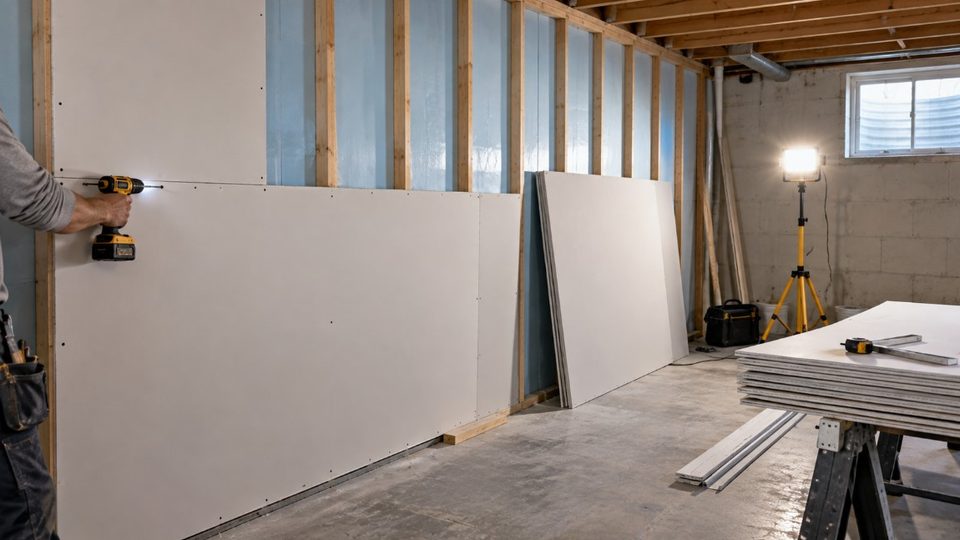
Rebuilding what remediation removed — drywall, insulation, flooring, trim — using assemblies that will not recreate the original failure.
The IICRC S520 standard is the reference document for mold remediation in the United States. It is a standard of care, not a law, which in an unlicensed state like Pennsylvania means the difference between a good contractor and a bad one is whether they follow it voluntarily. Here is what that looks like in practice.
If a quote is a single number on a page, you cannot compare it to anything and you cannot hold anyone to it. Before signing, confirm all of the following appear in writing.
| Item | Why it matters |
|---|---|
| Identified moisture source | Names the actual cause. Without it, recurrence is near certain. |
| Containment class & method | Determines whether spores stay in the work area. |
| Material removal list | Exactly what is being cut out, and where the cut lines are. |
| Drying targets | Numeric moisture content goals, not “until dry”. |
| Clearance criteria | Defines pass or fail, decided before work starts. |
| Who performs clearance | Must be independent of the remediation contractor. |
| Reconstruction scope | Separates remediation from rebuild so you can compare bids fairly. |
Upper Merion and the surrounding townships contain nearly three centuries of continuous construction. Knowing when a house was built tells an experienced inspector where to look first.
| Era | Typical here | Where mold appears | Root cause |
|---|---|---|---|
| Pre-1900 | Fieldstone farmhouses — Gulph Mills, Valley Forge, Wayne, Villanova, old Norristown | Base of foundation walls, sills, joist ends, behind furred-out basement finishes | Capillary rise through uncoursed rubble and lime mortar; no damp-proof course ever existed |
| 1900–1940 | Twins and rowhomes — Norristown, Bridgeport, Conshohocken; Main Line Victorians | Party walls, cellar corners, behind plaster, around original cast-iron stacks | Shared wall assemblies, failed pointing, corroded drain lines, no perimeter drainage |
| 1940s–1950s | Cape Cods and early ranches — the Upper Merion postwar boom | Kneewall attic cavities, rafter bays, top plates, ceiling below eaves | Unconditioned kneewall triangles, minimal ventilation, ice damming at the eave |
| 1960s–1970s | Split-levels and colonials across Upper Merion, Plymouth, Blue Bell | Below-grade split-level rooms, sub-slab perimeter, original bathrooms | Partially buried living space, deteriorated waterproofing, unvented bath fans |
| 1980s–1990s | Planned communities — Chesterbrook, Eagleview, North Wales, Collegeville | Finished basements, vented crawl spaces, attached-garage walls | Stud walls and fiberglass against cold foundations; crawl space venting that fails in this climate |
| 2000s–present | Townhomes, condos and apartments — KOP Town Center, Village at Valley Forge, Eagleview | Bathroom and laundry walls, air handler closets, north-facing exterior corners | Very low air leakage with no balanced mechanical ventilation; interior humidity has nowhere to go |
Construction eras are generalisations about typical local building practice, not statements about any individual property. Only an on-site assessment can establish what is happening in a specific house.
Upper Merion Township and the surrounding Main Line and Montgomery County communities. Each area page covers that community’s specific building stock, drainage and flood history.
Written for this climate and this building stock — not generic advice recycled from a hot, humid, slab-on-grade market.
On 1 September 2021 the Schuylkill overwhelmed Bridgeport, Norristown and Conshohocken. What was done badly in the rush — and how to tell whether your house is still carrying it.
The stud wall, fiberglass and drywall assembly built against a cold foundation is the single most reliable mold generator in this region. The physics, and the assembly that works instead.
A roof problem that becomes a mold problem six months later, in a ceiling nowhere near the ice. How to read the evidence in spring.
Straight answers, including where the honest answer is that you may not need to spend anything. For a question specific to your property, call the line.
Start by working out what you are actually dealing with, because the right trade differs. Damp on a basement wall every July is condensation and needs a dehumidifier and air sealing, not a remediation crew. Growth on attic sheathing is a ventilation fault. Material that has been wet for weeks needs contained removal to IICRC S520. Whoever you call, ask for proof of general liability insurance, current IICRC certification for the technician doing the work, a written scope before anyone starts, and a PA Home Improvement Contractor number for any rebuild. Pennsylvania does not license mold remediation, so those four documents are the check. If you would rather talk it through first, call (610) 702-8235 and describe what you are seeing — you will get a read on which of those it probably is before you book anyone. We cover King of Prussia and Upper Merion and eighteen surrounding communities.
Because almost every home here has one. Southeastern Pennsylvania is full-basement country — unlike the slab-on-grade South, the standard house in Upper Merion, Tredyffrin and Lower Merion sits on a masonry box buried four to eight feet in the ground. That wall stays at deep-earth temperature, roughly 52–58°F year round. From roughly June through September, King of Prussia outdoor air carries dew points in the mid-60s to low 70s°F. When that air reaches a 55°F foundation wall, it is already below its dew point, and water condenses out of the air directly onto the masonry, the cold water lines and the underside of the floor above. No leak is required. This is the single most common mold mechanism in the region and the reason opening basement windows in July makes the problem worse, not better.
Mold colonies become established on wet paper-faced drywall, carpet pad, and fiberglass insulation in roughly 24 to 48 hours at normal indoor temperatures, and visible colonies typically appear in 3 to 7 days. The clock does not stop because the surface feels dry — what matters is the moisture content inside the material. This is why the response window after a sump pump failure, a burst supply line, or a Schuylkill or Perkiomen flood event is measured in hours. Call the line and describe what happened; a specialist will tell you what needs to happen tonight versus what can wait until morning.
No. Pennsylvania has no state licensing or registration program for mold inspectors or mold remediation contractors. Anyone can legally print a business card and call themselves a mold remediator in this state. That makes verification your responsibility as the property owner. Before hiring anyone, ask for: proof of general liability and pollution liability insurance; IICRC S520 certification for remediation work; a written scope of work naming the containment method and the clearance criteria; and, if any rebuilding is involved, a Pennsylvania Home Improvement Contractor (PA HIC) registration number, which you can verify free through the PA Attorney General. Call the line and a specialist will walk you through those questions at no charge, whoever you are thinking of hiring.
This is the most common call we take from Chesterbrook, Blue Bell, Collegeville and the 1980s–2000s subdivisions. In a typical finished basement, a wood stud wall was built directly against the foundation, fiberglass batts were stuffed between the studs, and drywall was hung over it. The foundation wall is cold and slowly damp; the fiberglass holds that moisture against the back of the paper-faced drywall; and the whole assembly is sealed from view. Mold grows on the back of the drywall and on the bottom plate for years before anything is visible on the finished side. The musty odor is microbial VOCs migrating through the wall. Confirming it requires moisture metering, thermal imaging, and often a small inspection opening in a low-visibility spot — not guesswork.
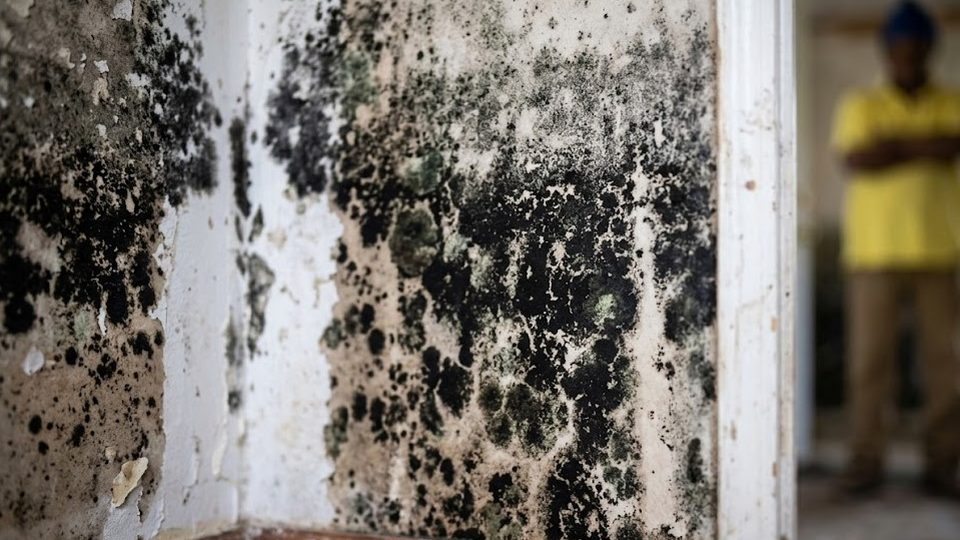
Treat visible dark-green or black growth as something not to disturb, but do not panic. Stachybotrys chartarum needs sustained, saturating moisture — a long-running leak, a flood, chronic condensation — so its presence almost always means there is an active water problem behind it that also needs to be found and fixed. Do not scrub it, do not sand or scrape it, do not run a fan at it, and do not run your HVAC system if the growth is near a return. Each of those aerosolizes spores and spreads the contamination through the ductwork. Close the door to the area and call the line. A specialist will tell you what containment is warranted before anyone touches it.
Usually only when the mold is the direct result of a covered, sudden and accidental event — a burst pipe, a failed water heater, a storm-damaged roof, an overflowing appliance. Mold caused by long-term seepage, chronic condensation, deferred maintenance, or groundwater is almost always excluded. Many Pennsylvania policies also carry a specific mold sublimit, commonly in the $5,000–$10,000 range, that caps the payout even when the cause is covered. Surface-water flooding — the Schuylkill leaving its banks, for example — is never covered by a standard homeowners policy and requires separate NFIP flood insurance. Documentation is what determines the outcome: moisture readings, dated photographs, and a written scope produced before demolition starts.
Call the line and describe what you are dealing with. A specialist will tell you honestly what it is likely to be and what should happen next — including when the answer is that it can wait.
Call (610) 702-8235