What Encapsulation Is, and the Line It Must Not Cross
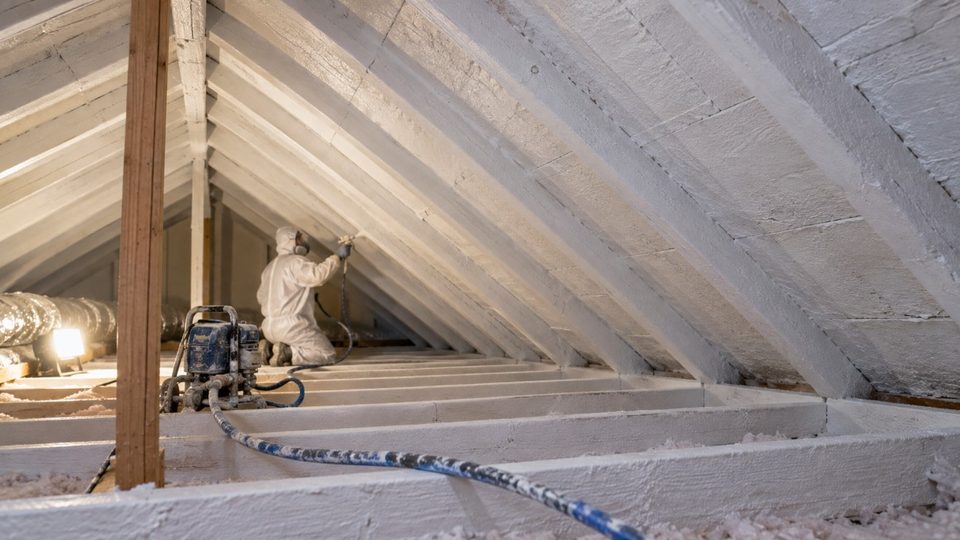
Mold encapsulation is the application of a specialised coating over a surface that has already been cleaned, in order to lock down residual staining and any remaining microscopic material, and to leave a sealed, inspectable surface. Used correctly it is a legitimate and useful finishing step.
Used incorrectly — sprayed over active growth on a surface that is still getting wet — it is one of the more damaging things that can be done to a building, because it hides a live problem behind a clean white surface and delays discovery for years.
Encapsulation is a step that follows cleaning. It is never a replacement for it, and it is never a replacement for fixing the water. If a quote proposes to encapsulate without first removing contaminated porous material, cleaning the remaining surfaces, and identifying the moisture source, that is not remediation. It is painting over the problem, and it is common enough in the attic trade in particular that it is worth being direct about.
Where Encapsulation Genuinely Helps
- Attic sheathing and rafters after cleaning. The most common legitimate application. Even properly cleaned sheathing often retains dark staining in the wood grain that no amount of further cleaning will remove without damaging the wood. A white encapsulant locks that down, brightens the attic considerably, and — the underrated benefit — creates a uniform clean reference surface so that any future growth is immediately obvious against it.
- Crawl space framing after remediation. Same reasoning, and it also makes an unpleasant space easier to inspect with a torch.
- Basement and foundation masonry. Where staining remains after cleaning, and as part of a rebuilt assembly. Choose the product carefully — see the vapour permeability discussion below.
- Framing lumber that cannot be replaced. Structural members that have been cleaned but retain staining, particularly in historic buildings where replacement is undesirable.
- As a documented finishing step. On a real estate transaction or an insurance claim, a clean encapsulated surface photographs well and demonstrates that work was completed.
Product Types, and Why Vapour Permeability Matters Here
This is the technical point that most homeowners never hear and that determines whether an encapsulant helps or harms.
Coatings differ enormously in how readily water vapour passes through them. A highly permeable (vapour-open) coating lets a damp substrate continue to dry. An impermeable coating does not, and if applied to a wall that receives moisture from behind, it traps that moisture inside the material. In masonry that produces spalling and blistering as trapped water freezes or crystallises; in wood it prolongs the wetting.
| Type | Where it belongs | Watch out for |
|---|---|---|
| Water-based acrylic antimicrobial coating | Attic sheathing, rafters, crawl space framing. The standard choice. | Low odour, reasonably permeable. Requires a genuinely clean, dry substrate. |
| Fungicidal / IAQ-rated coating | Same, where an EPA-registered fungistatic film is specifically wanted. | The fungistatic property protects the film itself — it does not sterilise the wood beneath. |
| Pigmented shellac-based primer | Odour and stain blocking on wood and framing. | Strong solvent odour during application, and much less vapour-permeable. Not appropriate on masonry that must dry inward. |
| Elastomeric masonry coating | Above-grade masonry where flexibility is wanted. | Often low permeability. Genuinely risky on a foundation wall subject to capillary rise. |
| Cementitious “waterproof” coating | Marketed for basements. | Frequently the wrong answer here. On a stone or block wall with rising damp it traps water and drives spalling. See basement mold removal. |
| Crawl space vapour barrier (sheet) | Earth floor and perimeter walls. | Not a coating at all, though often bundled under the same heading. See crawl space encapsulation. |
The fieldstone and rubble foundations of Gulph Mills, Valley Forge, Wayne, Villanova and old Norristown have no damp-proof course and are permanently in capillary contact with the ground. These walls stay sound by being vapour-open — water enters and evaporates from the inside face. Applying an impermeable coating does not stop the water entering; it stops it leaving, and the moisture then finds another exit, usually by spalling the face of the stone or the mortar joint. For historic masonry the correct approach is lime-based, vapour-open materials and mechanical dehumidification. Manage the moisture; do not seal it in.
Application: What Should Actually Happen
- Remove all contaminated porous material firstInsulation, drywall, anything cellulose that was wet. You cannot encapsulate your way out of a wet batt of fibreglass.
- Clean the substrate mechanicallyHEPA vacuuming, then physical cleaning. For attic sheathing and crawl space framing with heavy staining, soda blasting or dry-ice blasting is the usual method — it removes growth and most discolouration without introducing the water that wet scrubbing does.
- Dry to documented targetsWood should be at or below roughly 16% moisture content before coating. Coating damp wood seals moisture in and is a common and avoidable error.
- Correct the moisture sourceBath fan ducted to the exterior, soffit baffles installed, air sealing at the ceiling plane, drainage corrected. If this is not done, everything above is temporary.
- Apply antimicrobial, then encapsulateAn EPA-registered antimicrobial on the cleaned surface, allowed to dwell as the label requires, then the encapsulant at the manufacturer's specified coverage rate. Spraying it thin to cover more area defeats the purpose.
- Verify coverage and documentPhotographs before, after cleaning, and after coating. On an attic this is what a future buyer's inspector will want to see.
What Mold Encapsulation Costs in King of Prussia
Encapsulation is priced by the area coated, and every range below assumes the surface has already been cleaned. Planning figures for this market:
- Attic sheathing after cleaning — roughly $1.50 to $3.50 per square foot, which on a typical house here comes to about $1,200 to $4,000.
- Crawl space framing — roughly $1,500 to $4,000, usually quoted inside a full crawl space encapsulation package with the vapour barrier.
- Basement masonry coating — roughly $2 to $5 per square foot, and only with a vapour-open product.
A quote well under those figures almost always means the cleaning is not included. That is the one thing encapsulation cannot substitute for: coating over growth that was never removed seals contamination under a film and hides it from the next inspection. Ask any quote to state separately what is being cleaned, what is being coated, and which product is being used. The cost guide covers how this sits alongside the rest of a project.
What Encapsulation Does Not Do
Worth being explicit, because these claims get made.
- It does not kill mold. An antimicrobial does that, and only on the surface it contacts. The encapsulant is a physical film.
- It does not make contaminated drywall safe. Wet, colonised gypsum board is removed. There is no coating that changes this.
- It does not stop water. A coating on the inside face of a wall does not prevent water entering from outside. Water management happens outside and below.
- It does not permanently prevent regrowth. Fungistatic additives protect the coating film from being colonised. If the substrate gets wet again, growth will occur — on the coating, under it, or around it.
- It does not remove allergens already released. Encapsulation locks down what is on the surface; it does nothing about material already circulating or settled elsewhere.
Frequently Asked Questions
No, and this is the most common misuse of the service. Encapsulant applied over uncleaned growth seals the contamination in place under a coating — the mold is still there, and if the moisture source is still active it continues growing under the film. It looks resolved and is not. There is a substantial trade in cheap attic mold treatment that consists of exactly this, frequently sold off the back of a home inspection during a property sale. A future buyer's inspector who takes a moisture reading or looks closely at the eave will find it. Clean first, correct the ventilation or bath fan problem that caused it, then encapsulate if you want the cosmetic and inspectability benefit.
Attic sheathing runs roughly $1.50 to $3.50 per square foot after cleaning — about $1,200 to $4,000 on a typical house here — crawl space framing $1,500 to $4,000, and basement masonry $2 to $5 per square foot. The full breakdown, and what an unusually low quote usually means, is in the cost section above.
Only insofar as the fungistatic additive resists colonisation of the coating film itself. It does not change the conditions that caused the growth. If the bath fan still vents into the attic, if the soffits are still blocked, if the crawl space still has a bare earth floor, moisture will return and so will the mold — on top of the coating, or beneath it where the film has been compromised. The durable protection comes from correcting the moisture source. Think of encapsulation as the finish coat on a repair, not as the repair.
The water-based acrylic products normally used for attics and crawl spaces are low-VOC and low-odour, and once cured they are inert. Shellac-based primers have a strong solvent odour during application and for some hours afterwards, and adequate ventilation is needed while they cure. The genuine safety consideration is not the coating — it is the cleaning phase that precedes it, which disturbs material and requires proper containment, negative air and protective equipment. Ask what the containment plan is, particularly for attic work, because the attic hatch and every ceiling penetration is a direct path into your living space.
It depends entirely on what is making the wall wet, which is why the diagnosis has to come first. If you have a modern poured concrete foundation with occasional minor seepage and good exterior drainage, a masonry coating can be a reasonable component of a broader approach. If you have an older stone or block foundation with capillary rise — constant dampness at the base of the wall, white efflorescence, worse in wet seasons — then an impermeable coating is likely to make things worse by trapping water in the masonry. And in either case, a coating applied to the inside face does nothing about water arriving from outside. Before agreeing, ask the contractor to state in writing what they believe the moisture mechanism is and how they determined it. See moisture source identification.