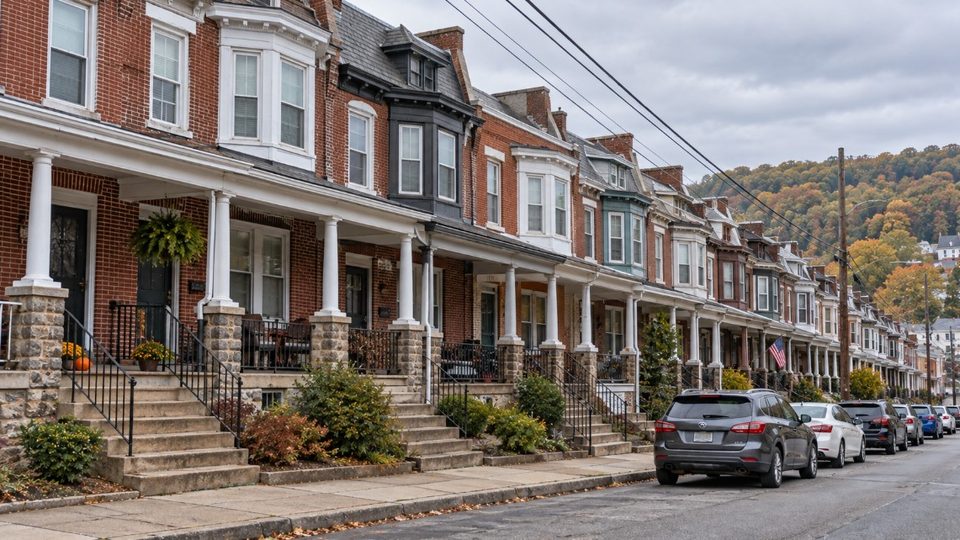
A Mill Town That Became an Office Town
Conshohocken sits on the Schuylkill between Norristown and Philadelphia, and it has changed more than almost any community in our coverage area. It was a heavy industrial river town; over the last three decades it has become a dense mix of converted mill and industrial buildings, new office construction, new apartments and townhomes, and the original nineteenth and early twentieth century housing on the hillside above the river.
That gives Conshohocken three quite different building stocks, and each one fails in its own way. Add a river at the bottom of a steep hill and you have most of what drives mold work here.
The River and the Hill
The Schuylkill gauge at Norristown has flood stage at 13 feet. Its all-time record crest is 25.10 feet, set during Hurricane Agnes in June 1972; Hurricane Floyd brought it to 22 feet in September 1999.
On 1 September 2021 the remnants of Hurricane Ida produced catastrophic flooding across southeastern Pennsylvania. The USGS recorded new peak streamflows of record at numerous gauges across the region during that event. High-water marks from that event were documented across southeastern Pennsylvania including near Conshohocken, and the low-lying riverfront areas of the borough are genuinely exposed.
Riverine floodwater is Category 3 — black water, and everything porous it contacted must be removed rather than dried in place. That applies as much to a converted mill building’s lower level as to a house.
The hill above the river creates the second, less obvious problem. Conshohocken rises steeply from the Schuylkill, and properties on that slope have lateral groundwater moving downhill through the soil and through fractures in the underlying rock, arriving at the uphill foundation wall under hydrostatic pressure. The signature is distinctive: water appears on one wall only, after prolonged rain rather than a brief downpour, because the ground has to saturate first. Sealing the inside face of that wall does not work, because the water is arriving under pressure from outside. The effective fixes are exterior — a curtain drain intercepting the water upslope, corrected grading, managed roof discharge — sometimes with an interior drainage system to a sump as a secondary measure.
Converted Mill and Industrial Buildings
These are a distinctive and genuinely difficult category, and Conshohocken has a lot of them.
A converted mill typically combines: massive masonry walls with no damp-proofing, in permanent capillary contact with the ground; lower levels at or near the river’s flood elevation; and modern insulated fit-outs installed inside a historic envelope that was never designed to be sealed. That last point is the critical one. The original building worked by being vapour-open — thick masonry that absorbed moisture and released it. Install a modern insulated, air-sealed interior wall against that masonry and you create a cold, dark, permanently damp cavity behind the finish, exactly as in a residential basement but at a much larger scale.
These buildings also hold an enormous amount of water once wet. Massive masonry dries very slowly, and after a flood the wall can remain at elevated moisture content for months after the visible water has gone and the surfaces feel dry. Drying programmes for these structures run far longer than for conventional construction, and pulling equipment on a normal schedule is one of the commonest failures.
The Hillside Housing
The original borough housing above the river runs to nineteenth and early twentieth century twins, rowhomes and detached Victorians on steep, narrow streets. The pattern is familiar: cellars with no damp-proof course, original galvanised supply and cast-iron drain piping long past service life, plaster on wood lath, flat and low-slope roofs on the rowhome stock, and party walls that transmit moisture between attached properties.
The steep topography adds the lateral groundwater problem described above, and it adds a drainage complication — runoff from streets and properties above arrives at the uphill side of each property in sequence down the hill.
New Apartments, Townhomes and Offices
The new construction has the opposite profile: well-waterproofed foundations, proper flashing, and envelopes so tight that household moisture has no route out without mechanical ventilation. Growth appears where warm moist interior air meets the coldest interior surfaces — north-facing exterior corners, behind furniture on outside walls, inside closets on exterior walls, and around the air handler closet. A humidity complaint in a five-year-old apartment here is a ventilation deficit rather than a defect.
Stacked multi-family adds the shared-responsibility problem: a leak in an upper unit becomes a mold problem below, and responsibility is divided between owners and the association under the governing documents. Document immediately and in writing.
For the office stock, the commercial pattern applies: large air handling plant distributes a localised source building-wide within minutes, and flat or low-slope roofs hide saturated deck insulation long before a ceiling tile stains. See commercial mold removal.
What We Get Called About Most in Conshohocken
Ranked by how often it comes up, and tied to the buildings that are actually here rather than to mold in general.
- Uphill wall seepage on the slopeThe borough rises steeply from the river. Water moves downhill through soil and rock fractures and arrives at the uphill foundation wall under hydrostatic pressure — one wall only, after prolonged rain. Interior sealing does not work on this.
- Converted mill fit-outs against massive masonryModern insulated, air-sealed interiors installed inside historic envelopes that were never designed to be sealed. The masonry holds enormous quantities of water and dries very slowly, so post-flood drying programmes here run far longer than for conventional construction.
- Riverfront flood exposureCategory 3 water in the low-lying districts, with the same incomplete-remediation legacy as Norristown and Bridgeport.
- New apartments that feel dampTight envelopes without adequate mechanical ventilation. A humidity complaint in a five-year-old building here is a ventilation deficit, not a defect.
- Nineteenth-century hillside housingCellars with no damp-proof course, original plumbing, and party walls between attached properties on steep narrow streets.
Neighborhoods and Sections We Cover in Conshohocken
Mold Services Available in Conshohocken
Mold Inspection
Thermal imaging and moisture metering to locate the source before anything is opened up.
DetailsBasement Mold Removal
The dominant mold problem in Conshohocken — finished walls, stone foundations and sump failures.
DetailsBlack Mold Removal
Full containment for water-damage indicator species, plus finding the sustained water source.
DetailsAttic Mold Removal
Sheathing and rafter growth traced back to ventilation, bath fans or ice damming.
DetailsWater Damage & Flood Mold
Burst pipes, sump failures and flooding — the 24 to 48 hour response window.
DetailsClearance Testing
Independent verification by a hygienist who did not perform the remediation.
DetailsWhat Mold Work Costs in Conshohocken
General market ranges for the Greater Philadelphia area, listed for the situations that actually come up in Conshohocken. These are planning figures rather than quotes — nobody can price a job they have not seen, and what moves a number most is the size of the wet area rather than the stained area. The full cost guide explains what drives each one up or down.
| Work | Typical range | Notes |
|---|---|---|
| Mold inspection with thermal imaging and moisture metering | $300–$700 | Most projects should start here |
| Emergency extraction and structural drying | $1,500–$5,000 | Within 24 hours this usually prevents the job above |
| Post-flood remediation, Category 3 water in living space | $8,000–$25,000+ | All contacted porous material must be removed |
| Historic stone cellar, lime-based repair | $4,000–$12,000 | Specialised materials; often less demolition |
| Unfinished basement clean, treat and dehumidify | $1,500–$5,000 | Where there is no finished wall assembly to remove |
| Sump pump replacement with battery or water-powered backup | $800–$2,500 | The highest-value preventive spend in a low-lying property |
| Independent post-remediation clearance testing | $350–$700 | The only stage that produces evidence rather than assurance |
Mold FAQ — Conshohocken, PA
Because it is the uphill wall, and this is extremely common on the Conshohocken slope. Water soaks into the hillside above you, moves downhill through the soil and through fractures in the rock, and arrives at that wall under hydrostatic pressure. It takes prolonged rain rather than a brief downpour because the ground has to saturate first. The important implication is that sealing the inside face will not work — the water is arriving under pressure from outside, and a coating will simply be pushed off or the water will find another path. The effective approach is exterior: intercept and divert the water upslope with a curtain drain, correct the grading, and manage roof discharge, possibly with an interior drain to a sump as a secondary measure.
It can be, for a specific reason. These buildings have massive masonry walls with no damp-proofing, in permanent capillary contact with the ground, and their lower levels are often close to the river's flood elevation. The original structure coped with that by being vapour-open — the masonry absorbed moisture and released it. Modern insulated, air-sealed fit-outs installed against that masonry create cold, dark, permanently damp cavities behind the finish. They also hold a great deal of water once wet and dry very slowly, so after any flood or leak, drying programmes need to run much longer than for conventional construction. If you have a musty smell with no visible source in a converted building, the cavity behind the finish is where to look.
General market ranges: a small contained area, roughly $600 to $1,800. A hillside cellar remediation with drainage correction, roughly $4,000 to $14,000 including exterior work. Post-flood remediation in a riverfront property, commonly $8,000 to $25,000. Converted mill building work is priced per project and genuinely requires a site visit — the masonry drying alone changes the economics. Apartment and condo remediation, roughly $1,500 to $6,000. Inspection roughly $300 to $700. Planning ranges, not quotes.
Very unlikely. That combination is the signature of an under-ventilated tight envelope, which is standard in new construction. The building is doing what it was designed to do — keep air in — and the moisture your household generates has nowhere to go. Check whether the unit has an ERV or HRV and whether it is switched on with a clean filter, run the bathroom fan for twenty minutes after showering rather than just during, avoid drying laundry indoors, and put a hygrometer in the living space. Sustained readings above 55 percent confirm it. Raise it with management as a ventilation question rather than a mold complaint and you will get a more useful response.
Some properties are, yes. The 1 September 2021 event produced record flooding across southeastern Pennsylvania, and the regional contractor market was overwhelmed for months afterwards. A good deal of the work done in that window was incomplete — water removed and surfaces cleaned, but cavities never dried to documented targets and no clearance testing performed. Since riverine floodwater is Category 3 and requires removal of all contacted porous material, anywhere that material was covered over instead still holds the contamination. Persistent musty odour, staining at the base of walls, or a lower level that has never smelled right since are all worth investigating.